
Research Overview
My research lies at the intersection of behavioral ecology, evolution, and conservation biology, with a strong focus on bats as model organisms. I study how ecological conditions, social environments, and anthropogenic change shape animal behavior, communication, group dynamics, and habitat use. By integrating long-term fieldwork, acoustic monitoring, social network analysis, and statistical modeling, I seek to understand how behavioral plasticity and cooperation contribute to species resilience in changing environments.
I am particularly interested in the mechanisms driving social cohesion, decision-making, and habitat specialization in vertebrates—especially bats that rely on ephemeral or structurally unique roosts. These systems provide a powerful framework to explore evolutionary constraints and conservation challenges.
 Research Themes
1. Social Communication and Collective Decision-Making in Bats
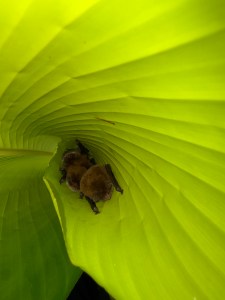
A core theme of our research examines how bats use vocalizations to coordinate movement, maintain cohesion, and make group decisions. A long-term collaborative work on Thyroptera tricolor (Spix’s disc-winged bat) together with Dr, Gloriana Chaverri has revealed that individuals within groups often adopt specific vocal roles, contributing differently to tasks like roost searching and recruitment. we explore how this variation in call rate, structure, and timing facilitates efficient group functioning, and how it reflects underlying social structures.
Using a combination of field recordings, playback experiments, and network analysis, we investigate how bats navigate dynamic roosting landscapes and share information. This research not only contributes to our understanding of communication in nonhuman animals, but also raises important questions about cooperation, leadership, and conflict resolution.
2. Behavioral Responses to Anthropogenic Change
I am also deeply interested in how bats respond to human-altered environments, particularly through changes in acoustic behavior. One of my lab’s ongoing lines of research explores how noise pollution—such as road traffic or industrial activity—affects echolocation and social calling in temperate bat species. This work, conducted in upstate New York, combines acoustic surveys, and habitat characterization to determine how species mitigate or fail to adapt to altered soundscapes.
These insights are essential for conservation, especially as acoustic degradation increasingly threatens species that depend on sound for navigation, foraging, and social cohesion.
3. Movement Ecology and Habitat Use
My third line of research focuses on how vertebrates, especially bats, move across landscapes, select roosts, and respond to habitat fragmentation. We have studied both tropical and temperate species, looking at how factors like temperature, day length, and resource distribution affect foraging behavior, space use, and social organization.
I am currently collaborating on research program in Belize together with Dr. Hugh Broders that will expand this work to include tropical bat communities in Central America. There, I aim to use passive and acoustic monitoring, and habitat surveys to assess how environmental variables shape movement ecology and how conservation strategies can be improved by understanding animal decision-making.
 Current Projects
-
Vocal Role Specialization in Thyroptera tricolor
Through international collaboration, I continue to investigate how group members of T. tricolor adopt distinct acoustic roles during roost-finding. This includes assessing kinship dynamics, leadership patterns, and decision-making under variable ecological pressures. We aim to understand how behavioral diversity within groups enhances collective success and resilience.
-
Noise Pollution and Communication Disruption
In New York State, we are examining how noise pollution affects bat communication and foraging efficiency. By combining passive acoustic monitoring with sound mapping and behavioral experiments, we evaluate the extent to which bats alter call structure, avoid noisy areas, or suffer from impaired detection and coordination.
-
Movement Ecology and Conservation in Belize
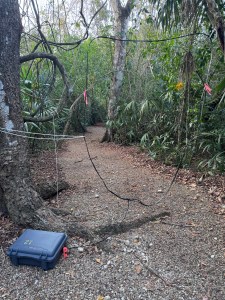
This emerging project will assess movement patterns and habitat use in bat species across disturbed and protected landscapes in Belize. With future goals of integrating this work into local conservation planning, we also seek to establish long-term acoustic monitoring sites and build regional collaborations focused on vertebrate biodiversity.
[State University of New York at Oswego] [Department of Biological Sciences]
 Sagot Lab